Many parents assume that if their child’s teeth look straight, there’s no reason to think about orthodontic treatment just yet.
But healthy smiles involve much more than straight teeth. Jaw development, bite alignment, and the space available for permanent teeth all play an important role in your child’s long-term oral health.
In recognition of National Cleft & Craniofacial Awareness & Prevention Month, it’s a great time to highlight how early jaw development can influence bite function, facial growth, and lifelong oral health.
At Wall Orthodontics, we know that not every child needs early orthodontic treatment, an evaluation can identify concerns that aren’t always visible when looking at your child’s smile.
In some cases, early expansion can help guide jaw growth, create space for permanent teeth, and support proper bite development, even when teeth appear perfectly straight.
Quick Answer: Can My Child Need a Palate Expander Even If Their Teeth Are Straight?
Absolutely. One of the biggest surprises for many parents is learning that straight teeth don’t always mean everything is developing as it should.
Some children have a narrow upper jaw, an early crossbite, or limited space for their permanent teeth even if their smile looks perfectly straight.
These concerns aren’t always visible at home, which is why an early orthodontic evaluation can be so valuable.
In many cases, Dr. Wall can identify potential concerns while your child is still growing and simply monitor development until the timing is right for treatment—if treatment is needed at all.
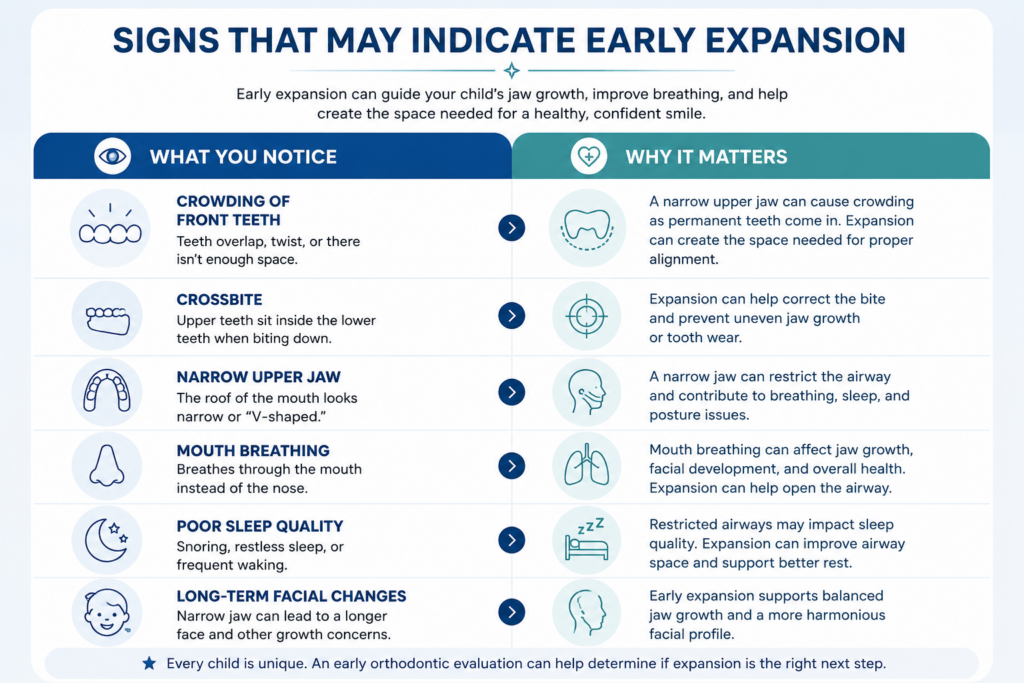
Signs That May Indicate Early Expansion
While every child is different, these are some of the signs we look for when determining whether early expansion may be beneficial.
!
Remember, these signs don’t automatically mean your child needs a palate expander. They simply indicate it’s a good time to have an orthodontist take a closer look.
Why Straight Teeth Can Be Misleading
One of the questions we hear most often is, “How do you know if your child needs braces?” The answer goes far beyond whether their teeth look straight.
During an orthodontic evaluation, Dr. Wall looks at how your child’s jaws are developing, how their teeth fit together, whether enough room exists for permanent teeth, and how their bite may change as they grow.
Sometimes a child’s smile looks perfectly straight simply because their adult teeth haven’t erupted yet, or because the upper jaw is too narrow for those teeth to fit comfortably in the future.
By identifying these concerns early, we can often monitor growth or recommend treatment at the right time, rather than waiting until a small problem becomes a bigger one.
Signs Your Child May Benefit From Expanders for Teeth
Expanders for teeth do much more than create space for crowded smiles. They can also help guide healthy jaw development and improve the way the upper and lower teeth fit together.
Your child may benefit from an orthodontic evaluation if you notice:
- Crossbite
- Crowded baby teeth
- Mouth breathing
- Frequent snoring
- Difficulty chewing
- Thumb sucking beyond the toddler years
- Teeth that seem to have little room for adult teeth to erupt
- A noticeably narrow smile
Keep in mind that not every child with these signs will need expansion. In fact, many children simply benefit from periodic monitoring while they grow. The goal of an early evaluation isn’t to start treatment right away…it’s to determine the right treatment at the right time for your child.
What Is the Best Palate Expander Age?
One of the questions we hear most often from parents is, “What is the best palate expander age?” The truth is, there’s no one-size-fits-all answer because every child grows at their own pace.
In general, the best time for expansion is while the upper jaw is still developing. For many children, that means treatment may be recommended between ages 7 and 12, when we can gently guide jaw growth and create space for permanent teeth if needed.
Some parents also ask about palate expander age 4. While it’s uncommon for a 4-year-old to need expansion, there are situations, such as certain bite problems, craniofacial conditions, or developmental concerns, where we’d recommend an early orthodontic evaluation.
More often than not, that first visit is simply an opportunity to monitor growth and determine if or when treatment may be beneficial.
What Is the Invisalign® Palatal Expander?
Not every child who needs expansion requires a traditional metal appliance. At Wall Orthodontics, we’re proud to offer the Invisalign® Palatal Expander for qualifying growing patients.
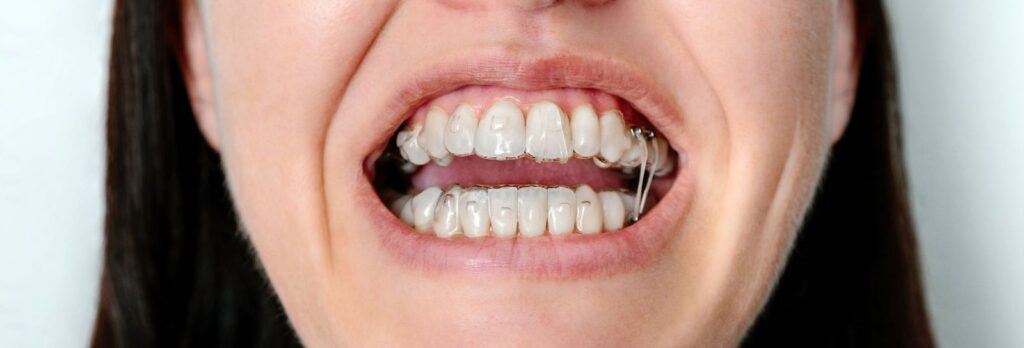
This innovative treatment uses a series of removable, 3D-printed expanders that gently widen the upper jaw without the center screw found on conventional expanders. Because they’re removable for eating and brushing, many children and parents appreciate the added comfort and convenience.
During your child’s consultation, Dr. Wall can determine whether a traditional expander or the Invisalign Palatal Expander is the best option based on their age, growth stage, and orthodontic needs.
Frequently Asked Questions About Early Expansion
Can my child need a palate expander if their teeth are straight?
Yes, this is something we explain to parents all the time. Straight teeth don’t always mean everything underneath is developing perfectly. Some children have a narrow upper jaw or early bite concerns that aren’t obvious just by looking at their smile.
What is the best age for a palate expander?
In most cases, children who need expansion are treated between ages 7 and 12, while the upper jaw is still actively growing. This is when we can often guide development most effectively.
Is age 4 too young for a palate expander?
Most of the time, yes, at age 4 we’re usually just monitoring growth and development. That said, in certain situations such as significant bite issues or craniofacial concerns, we may recommend an earlier orthodontic evaluation to keep a close eye on jaw development.
Is there a palate expander age limit?
Traditional palate expanders work best while a child is still growing. Once growth slows, expansion becomes more complex, but older teens and adults may still have options. In those cases, we may look at advanced approaches such as MARPE or other specialized expansion techniques depending on the situation.
Will my child still need braces after expansion?
Often, yes. It helps to think of expansion as creating the space first. Braces or Invisalign® are then used to fine-tune the bite and position the teeth into their ideal alignment.
Does every child who sees an orthodontist at age 7 need treatment?
No! And that’s an important point. Many children we see at that age don’t need treatment right away. Instead, we monitor growth over time and step in only when the timing is right. Early visits are about planning ahead, not starting treatment immediately.
Give Your Child the Best Start for a Healthy Smile
Even when a child’s teeth look perfectly straight, there can still be important growth and development happening beneath the surface.
That’s why early orthodontic evaluations are so valuable, they give us a chance to spot concerns early and guide treatment in the simplest, most effective way possible.
At Wall Orthodontics, our approach is always conservative and growth-focused. Whether your child needs monitoring, expanders for teeth, or future orthodontic treatment, our goal is to support healthy jaw development and create smiles that function well for life.
If you’re wondering whether your child could benefit from early orthodontic treatment, schedule a consultation with Wall Orthodontics in Statesboro, GA. Dr. Wall will evaluate your child’s growth and bite development and recommend treatment only if and when it’s truly needed.