If you’re starting Invisalign®, your treatment plan may include small additions like attachments or buttons, designed to help your aligners work more efficiently and move teeth more precisely.
These small details can make a big difference in how your teeth shift, how your bite improves, and how quickly you see results.
At Wall Orthodontics in Statesboro, GA, Dr. Wall is your board-certified orthodontist providing personalized Invisalign treatment for kids, teens, and adults.
For some patients, providing personalized treatment means using attachments, buttons, or elastics to guide more complex movements and ensure everything comes together exactly as planned.
Here’s what Invisalign attachments and buttons are, how they work, and what to expect during your treatment.
TL;DR: Invisalign Attachments vs Buttons
- Invisalign attachments are small, tooth-colored bumps bonded to your teeth to help guide precise tooth movement.
- Invisalign buttons are small anchors placed on teeth to hold rubber bands (elastics) in place during treatment.
- Attachments are used to help move individual teeth more efficiently and with greater control.
- Buttons are used to correct bite and jaw alignment by working with elastics.
- Not every patient needs attachments or buttons, as it depends on your personalized treatment plan.
- Invisalign attachments typically stay on your teeth for most of your treatment.
- Invisalign buttons are often temporary and may only be used while elastics are needed.
What are Invisalign Attachments (and Why Are They on Your Teeth)?
Invisalign attachments, also called Invisalign tooth attachments, are small, tooth-colored shapes that are carefully bonded to specific teeth as part of your treatment plan.
These attachments are designed to blend in with your natural teeth while giving your aligners the extra grip they need to move teeth more precisely.
Attachments are:
- Subtle and tooth-colored for a low-profile look
- Strategically placed on certain teeth based on your treatment plan
- Shaped (square, rectangular, or beveled) depending on the type of movement needed
You may also notice that your aligners fit more securely or “snap” into place around these areas. This is by design and helps guide your teeth into alignment more effectively.
What do Invisalign attachments do?
Invisalign attachments give your aligners additional grip and control, allowing for more precise and efficient tooth movement.
They help your aligners apply targeted pressure to:
- Rotate certain teeth
- Move teeth vertically (up or down)
- Guide more detailed or complex movements
Think of them as small, strategic contact points that help your aligners move teeth exactly as planned, making your treatment more predictable and effective.
Are there different types of Invisalign attachments?
Not all attachments are the same, and that’s intentional. Your orthodontist will place different types of Invisalign attachments based on how each tooth needs to move.
Common variations include:
- Rectangular attachments for rotation and control
- Beveled attachments for directional movement
- Smaller rounded shapes for subtle adjustments
Do Invisalign attachments stay on the whole time?
In most cases, yes, attachments stay on for the majority of your treatment. However, some may be removed or repositioned along the way while others stay until the very end.
It all depends on how your teeth are moving and what your plan requires.
Now, what are Invisalign buttons?
Invisalign buttons are a specific type of attachment used in certain treatment plans to support bite correction.
They are small, tooth-colored or clear anchors that are placed on select teeth and designed to work with elastics (rubber bands).
As part of your treatment, your orthodontist may incorporate buttons to:
- Create anchor points for rubber bands
- Help guide the upper and lower jaws into proper alignment
- Support more complex bite adjustments
You may also notice that your aligners are designed to fit around these buttons or include small cutouts. This is intentional and allows everything to work together seamlessly.
What are Invisalign buttons used for?
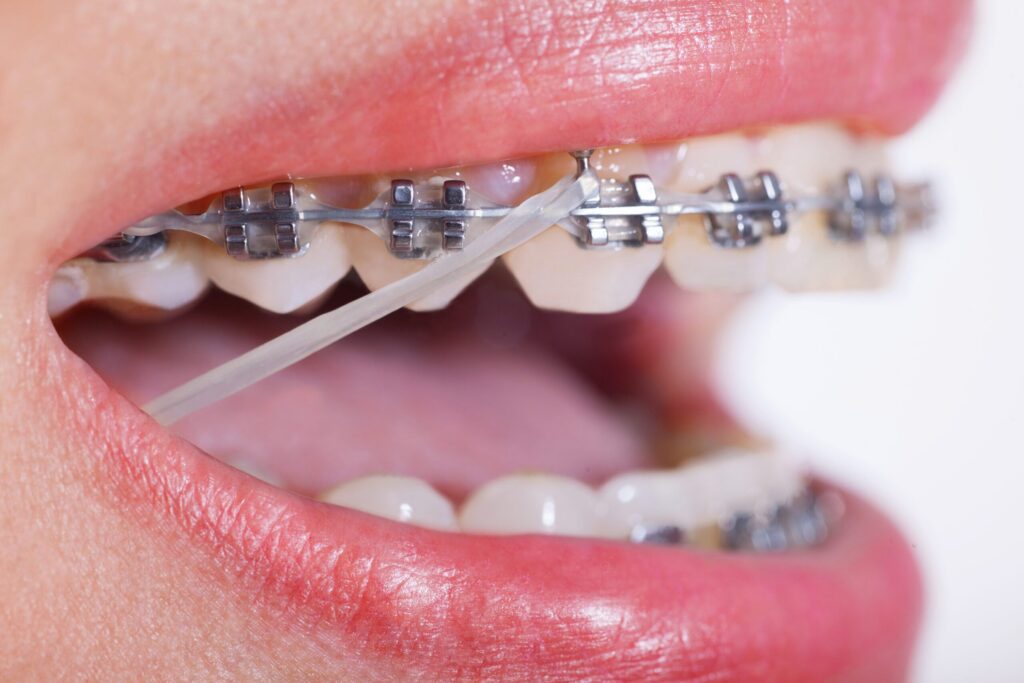
Invisalign buttons are used to hold rubber bands (elastics) in place, which apply consistent, gentle pressure to improve how your bite comes together.
These elastics apply steady pressure to:
- Correct bite issues
- Align the upper and lower jaws
- Improve how your teeth come together
- Invisalign buttons for elastics help treat overbites, underbites, and crossbites
For example: A rubber band might connect from a button on your upper molar to a hook on your lower aligner, guiding your bite into proper alignment.
Invisalign buttons vs attachments: What’s the real difference?
Here’s the simplest way to think about it:
Invisalign Attachments:
- Help move individual teeth
- Bonded to teeth and covered by aligners
- Improve aligner grip and precision
- Usually subtle and tooth-colored
Invisalign Buttons:
- Help correct bite/jaw alignment
- Used with elastics (rubber bands)
- Act as anchor points for rubber bands
- May be slightly more noticeable
Both are small, but they play very different roles in your treatment.
Do Invisalign buttons stay on your teeth the whole time?
Not always. Unlike attachments, buttons are often temporary. They’re only needed while wearing elastics, and once your bite improves, they may be removed.
Your orthodontist will guide you on exactly how long you’ll need them.
How are Invisalign attachments and buttons removed?
At the end of treatment (or when they’re no longer needed):
- Attachments and buttons are gently polished off
- The process is quick and comfortable
- No damage is done to your teeth
Most patients are surprised by how easy it is.
Invisalign attachments and buttons in Statesboro
If you’re considering Invisalign in Statesboro, or you’ve been told you may need attachments or elastics, our team is here to guide you through it.
At our orthodontic office in Wall Orthodontics, Dr. Wall creates personalized Invisalign plans designed for efficient, precise tooth movement, long-term bite correction, and a smooth, comfortable treatment experience.
Not everyone needs attachments or buttons, but if you do, they’re a key part of getting the best possible result.
Schedule a complimentary consultation today to learn more about Invisalign for you or your child, and get clear answers on what’s possible for your smile.
Thinking about Invisalign in Statesboro? Let’s make it clear!
If you’re considering Invisalign in Statesboro, or your treatment plan includes attachments, buttons, or elastics, you won’t be left guessing.
At our orthodontic office in Statesboro, Dr. Wall takes the time to walk you through every detail of your treatment. We’ll explain what each addition does, why it’s needed, and how it helps you get the best possible results.
Not every patient needs attachments or buttons, but when they are part of your plan, they’re used with purpose. From your first visit to your final results, you’ll always know what to expect, what’s working, and what’s next.
Schedule a complimentary consultation today to learn more about Invisalign in Statesboro and get clear, confident answers about your smile.